Blog post
When AI becomes a partner and not a black box.
Posted by
Raoul Grouls
on
October 26, 2026
Home >> Artificial Intelligence >> When AI becomes a partner and not a black box.
Introduction
Human + AI.
Artificial intelligence is becoming part of more decisions, documents, analyses and workflows. For organizations, the attraction is obvious: AI can process information quickly, help people navigate large amounts of content and reduce the time spent on repetitive knowledge work.
At the same time, organizations cannot simply hand responsibility over to a machine. In sectors where decisions need to be explained, reviewed or defended, people still need to understand where an answer came from and why they should trust it.
This creates an interesting tension. We want AI to do more of the work, but we also need humans to remain accountable for the outcome. The question is therefore no longer only how powerful AI can become, but how the relationship between people and AI should be designed.
Accountability
The accountability gap.
A machine can generate an answer, but it cannot ultimately be held responsible for that answer.
That matters in environments where transparency and traceability are essential. A legal professional, government employee or financial specialist may use AI to support an analysis, but the responsibility for the decision still sits with the person or organization using the system.
Generative AI makes that relationship more complicated. The user may receive an answer that sounds clear and well reasoned, while having limited visibility into how the system interpreted the available information. If something important was overlooked or a conclusion was based on incomplete context, the human user is still expected to notice.
One response is to verify everything manually. However, if every sentence, source and conclusion has to be independently checked, much of the efficiency that made AI attractive in the first place begins to disappear.
A useful AI system should therefore make accountability easier to maintain, rather than simply moving more verification work onto the user.
Human accountability
AI can support analysis and decision-making, but responsibility still sits with people. Especially in regulated or high-impact environments, users need to understand where information comes from and be able to explain why a decision was made.
Retrieval is not understanding
RAG can help AI find relevant information, but finding fragments is not the same as understanding the full picture. Important contradictions, gaps or exceptions can still be missed behind a fluent and convincing answer.
Verification fatigue
AI can save time when creating summaries or analyses, but the work does not always disappear. If every output still needs extensive checking, the verification burden simply moves to someone else and can quickly become another source of work.
A trusted AI partner
The goal is not to remove humans from the process. A better model combines human judgement and accountability with AI speed and accessibility, supported by structured knowledge that can be inspected, reused and trusted.
Explore our services.
Artificial Intelligence.
With our AI solutions, we focus on measurable impact by building systems that automate work, support decision-making, and integrate seamlessly with existing workflows.
Business Analysis.
By exposing assumptions, clarifying priorities, and aligning stakeholders, our business analysts ensure the right problems are solved and decisions are made consciously.
Custom Software.
We design and build custom software that fits your organization’s processes, data, and goals, delivering scalable solutions quickly through a structured approach.
Semantics & Data
We help organizations make data easier to understand, connect, and use by creating shared meaning across systems, teams, and technologies.
Retrieval
When retrieval looks like understanding.
Retrieval-Augmented Generation, or RAG, is often used to make generative AI more reliable. Instead of relying entirely on what a model already knows, the system retrieves information from selected documents and uses those sources when producing an answer.
This can be extremely useful, particularly when an organization wants AI to work with its own internal knowledge. But retrieval introduces another question: has the system understood the full body of information, or has it simply found a number of relevant fragments?
Those two things are not the same.
Imagine asking an AI system to analyse hundreds or even thousands of documents. Somewhere within those documents, two policies may contradict each other. An older document may still contain outdated information, while an exception to a general rule may be buried in another file entirely.
A retrieval system may find some of those pieces and miss others. The final answer can still sound coherent because generative models are very good at turning fragments into fluent language. That fluency can create confidence that the underlying information does not necessarily justify.
The problem is therefore not that retrieval is ineffective. It is that a convincing synthesis can sometimes hide the uncertainty, contradictions and gaps that still exist underneath it.
Hidden workload
AI can move work instead of removing it.
There is another side effect that is easy to overlook: verification fatigue.
Suppose someone uses AI to prepare a long analysis and then sends it to a colleague for review. The document may have taken ten minutes to generate, but the reviewer now has to determine whether the sources are correct, whether important information is missing and whether the conclusions actually follow from the available evidence.
The work has not necessarily disappeared. Part of it has simply moved from the person creating the document to the person responsible for checking it.
At a small scale, that may be manageable. At an organizational level, however, thousands of AI-generated summaries, recommendations and analyses can create an entirely new verification workload.
That is a problem if AI adoption is measured only by how quickly content can be produced. Generating more information is not automatically more efficient when someone else has to spend increasing amounts of time proving that the information can be trusted.
Structured knowledge
Making reasoning more explicit.
One possible way forward is to separate important organizational reasoning from the generative model itself.
Some knowledge does not need to exist only as text. Relationships, rules, definitions, decisions and logical dependencies can also be represented in structured forms that people and systems can inspect. This creates what can be described as a symbolic layer.
Consider a simple example. Instead of repeatedly asking an AI system to determine which policy applies to a particular situation, an organization could explicitly define the relationship between the policy, its scope, relevant exceptions and the controls that depend on it. Once those relationships have been reviewed and validated, they become reusable knowledge.
The AI does not have to reconstruct the same reasoning from a collection of documents every time someone asks a question. It can work with knowledge that already has structure and context.
For the people using these systems, the benefit is practical. Instead of searching through multiple documents to understand which requirements apply, they can access information with clearer connections between policies, decisions and operational controls. This can save time, reduce unnecessary interpretation and provide a stronger basis for informed decisions.
In environments where safety, compliance and operational risks matter, having access to information is only part of the challenge. People also need to understand how that information relates to their responsibilities and the decisions they make.
This also changes the role of the language model. Rather than being responsible for both discovering the logic and explaining it, the model can focus on what generative AI does particularly well: understanding the user’s question, navigating available knowledge and translating the result into useful human language.
Reusable knowledge
Verified once, reused many times.
This distinction becomes especially important when the same organizational knowledge is used repeatedly. If a reasoning step has to be recreated by AI every time, people may also need to verify it every time. That does not scale particularly well.
A structured knowledge layer creates another possibility. Important relationships can be reviewed when they are created or changed, then reused across different questions and workflows.
The verification effort becomes part of maintaining the organization’s knowledge rather than something that has to happen after every AI-generated answer.
It also makes disagreement easier to see. When two rules conflict or information is incomplete, the system does not necessarily have to hide that uncertainty behind a polished response. It can expose the conflict and allow a human to decide what should happen.
That is a much more useful role for AI in situations where judgement matters.
Ethical AI
Making values and responsibilities visible.
Trustworthy AI is not only about producing accurate and traceable answers. A system can follow clearly defined rules and still support decisions that raise ethical questions about fairness, privacy or acceptable risk.
These questions often begin with choices organizations have already made. Which policies take priority? When is an exception justified? Whose interests are affected?
Structured knowledge can help make these assumptions and decisions more visible. By explicitly defining rules, relationships and responsibilities, organizations can better understand not only how decisions are made, but also which values influence them.
However, transparency alone does not guarantee ethical outcomes. Human oversight remains essential, particularly when decisions involve competing interests, uncertainty or potential consequences for others.
Ethical AI is therefore not about allowing machines to make moral judgements on our behalf. It is about designing systems that support informed human decisions, make important assumptions easier to challenge and keep responsibility where it belongs: with people.
Human and machine
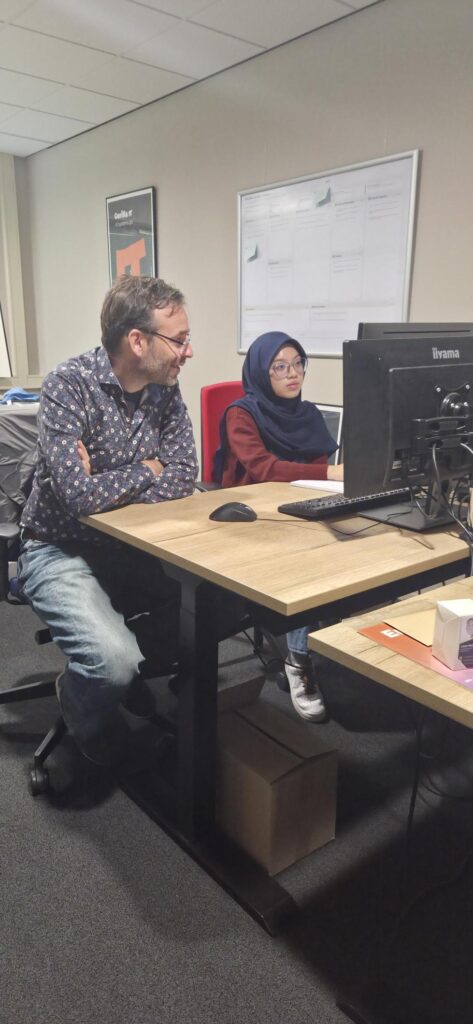
A better division of labor.
The goal of trustworthy AI should not be to remove people from the process.
There are things machines can do extremely well. They can process large amounts of information, identify relevant material quickly and make complex knowledge easier to access.
Humans bring something different. They understand context, make judgement calls, resolve ambiguity and remain accountable for the consequences of a decision.
The challenge is designing systems that allow each side to do what it does best.
A structured knowledge layer can help connect those roles.
The organization maintains explicit and verifiable knowledge, AI makes that knowledge accessible at speed, and people remain responsible for validating the rules and making the decisions that require judgement.
In that model, human oversight does not mean manually checking every sentence produced by AI. It means having visibility into the information and reasoning that matter.
Trust
From black box to trusted partner.
Trust in AI will not come simply from models becoming more powerful.
In many professional environments, trust comes from being able to understand what a system is working with, see how important conclusions are supported and know where human judgement still needs to enter the process.
One way to achieve this is to give AI clear, structured and validated knowledge to work with, rather than relying on it to interpret everything from scratch. This can make AI-generated answers easier to understand, review and use in practice.
AI can then provide speed, scale and accessibility without becoming the final authority. That may be what a trusted AI partner ultimately looks like: not a system that removes humans from the loop, but one that makes it easier for humans to stay meaningfully in it.
Interested in exploring this approach further? If you would like to understand how structured knowledge and human oversight can support more trustworthy AI, feel free to contact me for a deeper discussion.

About Raoul.
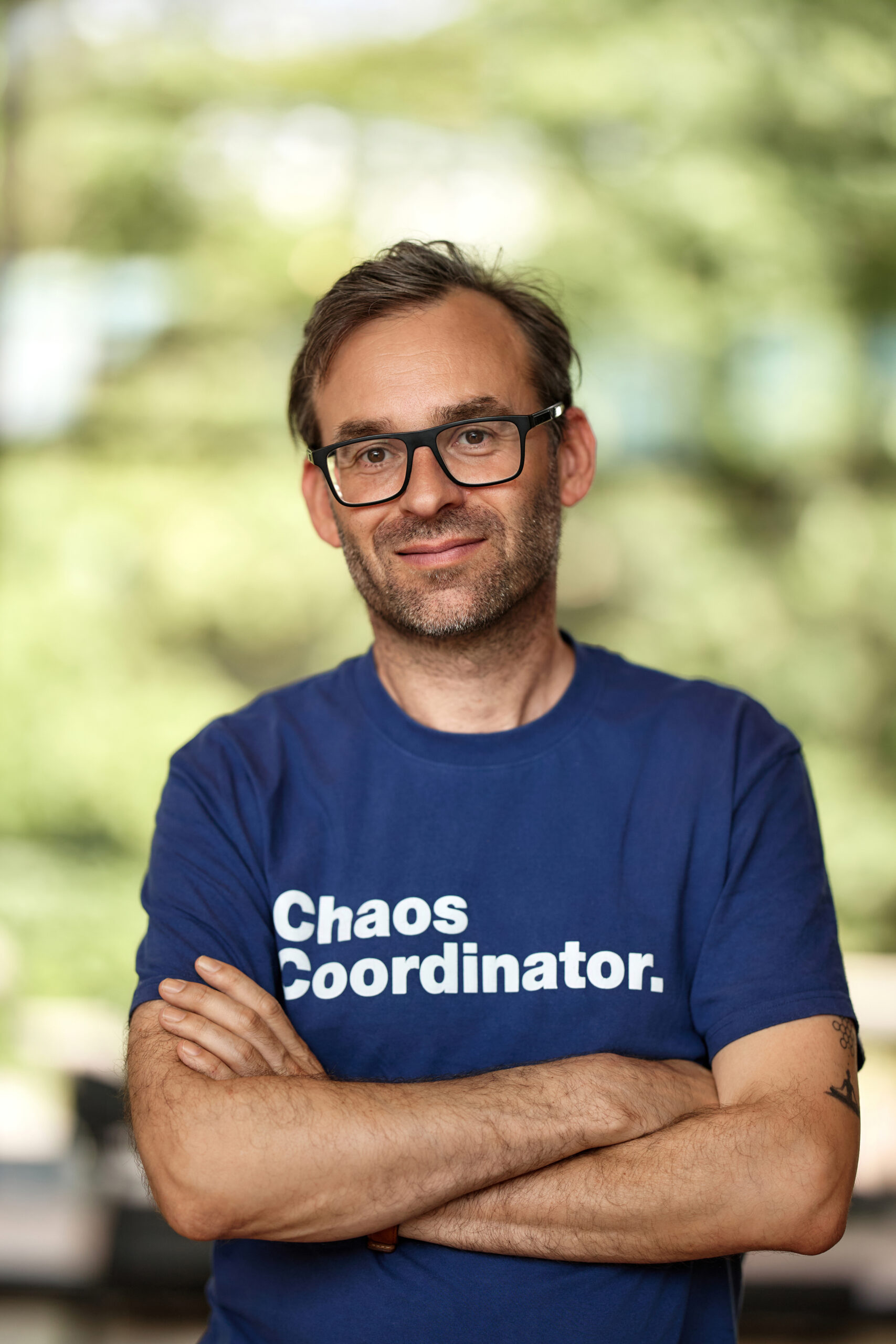
Since 2012, Raoul has designed and built AI systems, from first idea to products in daily use. He works with organizations as a whole, from the board to the developers: reliable AI needs a sound architecture and people who know how to work with it.
He designs AI strategies that execute, and help humans and AI cooperate in
meaningful ecosystems. His neuro-symbolic approach makes AI useful where
hallucinations cannot be tolerated, such as governance.
At Gorilla IT, we believe effective AI combines intelligent technology with clear reasoning and human expertise.
Curious how this approach could work for your organization? Let’s explore the possibilities together.