
Custom software
You don’t build great software alone. You build it together.
Did you know most custom software projects don’t fail because of technology?
They fail because of misunderstanding.
Not fully grasping how the business really works.
Not asking the right questions.
Not building true ownership together.
At Gorilla IT, we build tailor-made software. The quality of the code reflects the quality of the partnership behind it. We take the time to understand what’s really happening inside your organization. And we’ve been doing that for decades in complex environments where things simply have to work.
Home >> Custom software
Why it works
We build from understanding.
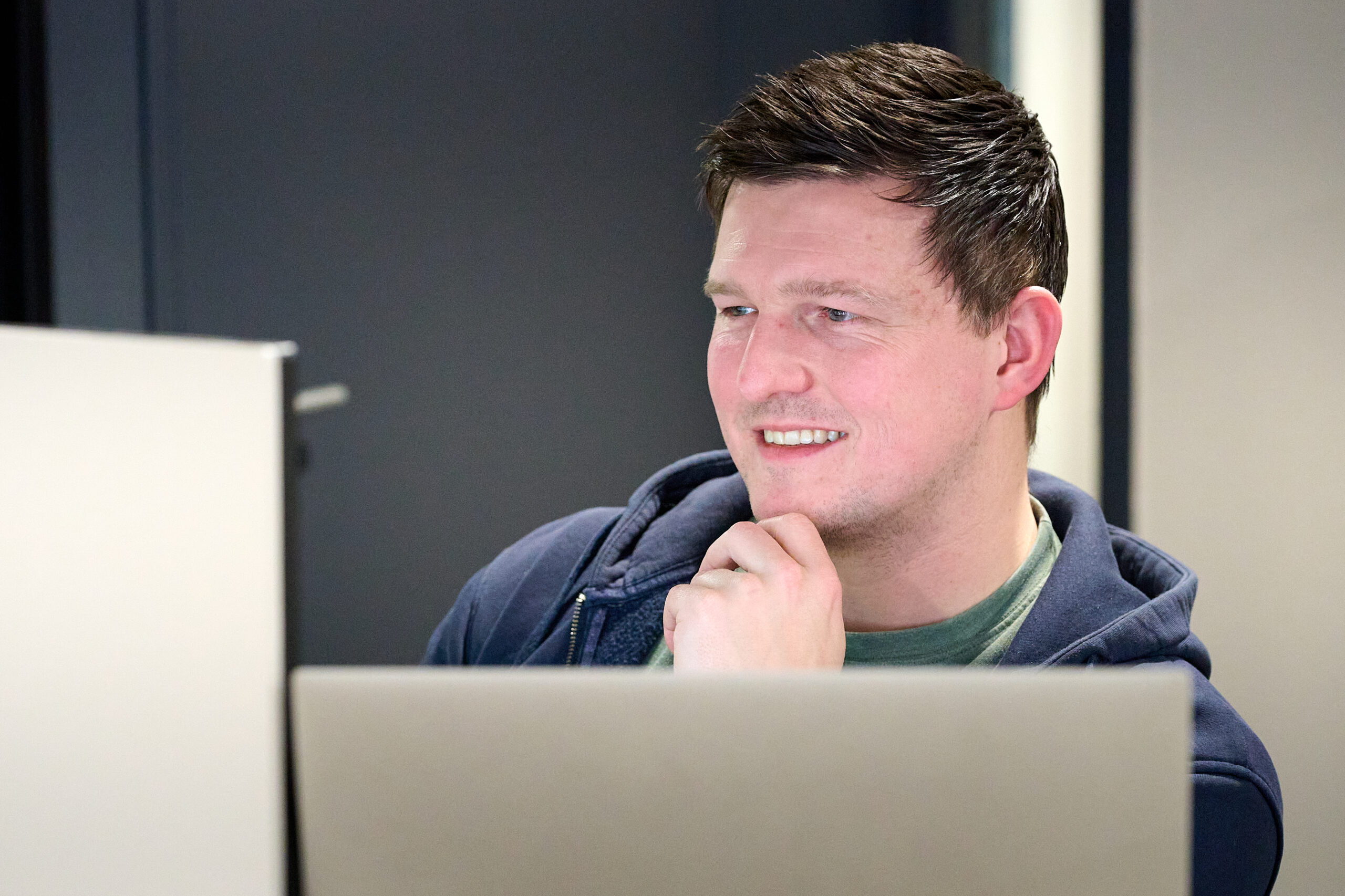
We start by listening. By thinking with you. By mapping how decisions are made, how processes actually run, and where friction shows up today. Our business analysts don’t operate from a distance. They sit next to your team. They talk to the people doing the work.
Did you know Gorilla IT works with senior-level business analysts across all major projects?
Not to produce heavy documentation, but to make sure the right decisions are made early.

Building something that truly fits.
Many of our clients rely on portals and platforms that are central to their daily operations. Customer portals. Partner environments. Booking platforms. Administrative systems.
These aren’t side projects.
They require trust, close collaboration, and deep sector knowledge. In the travel industry, for example, we’ve built platforms where multiple providers, rules, pricing structures, and edge cases come together in one seamless system. In the pensions sector, we’ve translated complex regulations into structured, manageable digital processes where accuracy is critical.
That level of fit doesn’t happen by accident.
It happens through partnership.
Customer portals
Secure, intuitive environments where customers can manage their information, track progress, and interact with your organization seamlessly.
Partner environments
Structured platforms that connect partners, streamline collaboration, and ensure everyone works within the same clear framework.
Booking platforms
Integrated systems that bring providers, pricing, and availability together in one scalable platform built for accuracy and performance.
Administrative systems
Reliable back-office systems that automate processes, reduce manual work, and give your teams real-time control over operations.
Real examples
Experience across complex domains.
We don’t just talk about collaboration. Our cases show it.
We have delivered custom software in environments where complexity and risk are non-negotiable. In each case, custom software was not a preference. It was the only viable option.

Health, Safety & Environment
Building systems aligned with internal safety protocols, not generic assumptions.

Travel & Leisure
Integrating multiple booking providers into a single platform, reducing administrative effort and improving customer experience.

Pensions
Digitizing complex regulations and rule sets while maintaining compliance and agility.
Semantic modeling
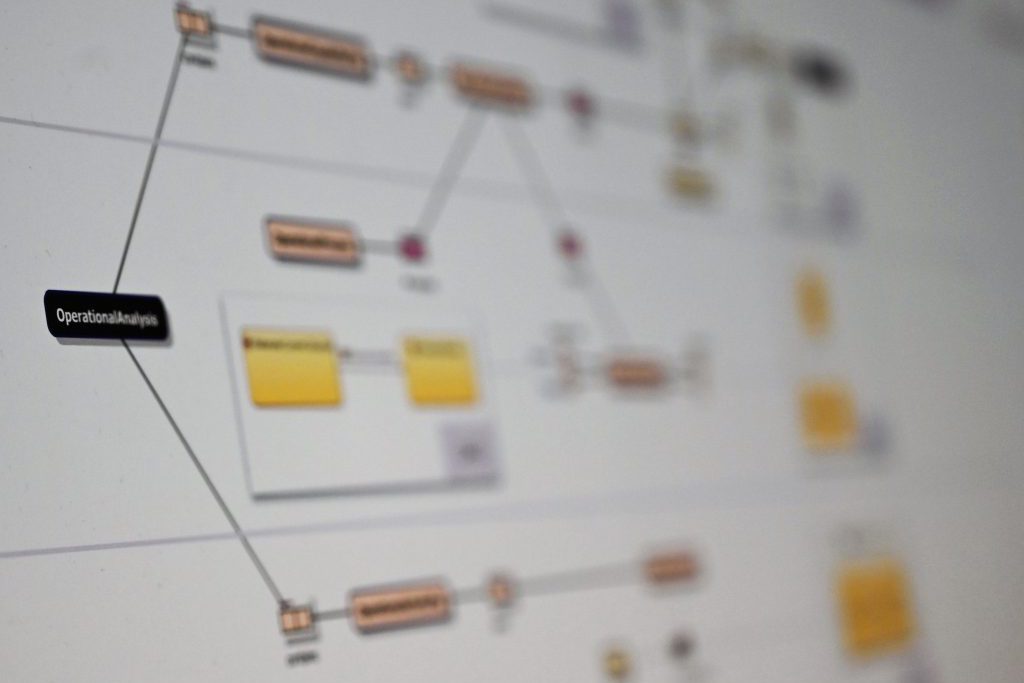
Translating deep domain knowledge into operational software where no standard solution existed.
And there’s more behind those examples.
Each project represents close collaboration, strategic alignment, and systems that continue to support real-world operations long after launch. We don’t just deliver software and move on. We build long-term partnerships where the platform evolves alongside the business.
Curious how that works in practice? Explore our success stories to see how we’ve helped organizations in travel, pensions, finance, and beyond turn complexity into clarity through collaboration and well-built systems.

Common concerns, addressed directly.
-
Custom software is expensive.
Upfront, yes. Over time, standard software often costs more through inefficiency, license stacking, and hidden operational effort.
-
It takes too long to build.
That assumption belongs to another era. Model-driven and low-code approaches significantly reduce delivery time while maintaining quality.
-
We’ll become dependent on the vendor.
Dependency is higher with SaaS. Custom software gives you ownership of logic, data, and roadmap. We design for transparency, modularity, and continuity.
How we work
Structured. Human. Thoughtful.
Our way of working didn’t come from theory or trend-driven methods. It evolved from years of building systems in complex environments where mistakes are costly and clarity matters.
We’ve learned that strong software doesn’t start with features. It starts with understanding.
Here’s what that looks like in practice:
-
We understand the industries we work in
Travel, pensions, finance, HSE. We know the regulations, the exceptions, and the operational realities behind the screens.
-
We ask the questions that clarify what really matters
Not just what you want built, but why. Where decisions are made. Where risk accumulates. Where flexibility is critical.
-
We translate business knowledge into structured models and clear requirements
Your expertise becomes something tangible and understandable. Not lost in conversation, but captured in a way that guides development.
-
We design before we develop
Architecture, flows, roles, dependencies. We make complexity manageable before a single line of code is written.
-
We build systems that feel natural to the people using them
Software should support the work, not force new habits. When it fits, adoption follows naturally.
-
We stay involved
Long-term partnerships matter. Systems evolve. Businesses change. We build with that in mind.
The result is not just custom software. It’s software that makes sense.
Discover how we map your processes and information so everyone in your organization gains clarity and control.
Choosing custom software
When custom software is the right choice.
Custom software is not always the answer. But it becomes the right answer when:
1.
Your processes are a differentiator
If what makes you successful does not fit into a SaaS template, forcing it will dilute your advantage.
2.
Your needs are specific or evolving
When requirements change faster than product roadmaps, waiting becomes a risk.
3.
Your IT landscape is fragmented
If value depends on smooth interaction between multiple systems, custom integration reduces friction and errors.
4.
Scalability and adaptability matter
When growth, regulation, or volatility are part of daily reality, rigid systems become a bottleneck. In these situations, standard software optimizes for average. Custom software optimizes for you.
When it needs to fit for the long term.
Custom software makes sense when the system becomes part of your strategy.
If you’re building something that has to last, scale, and stay aligned with your business, let’s talk.

